

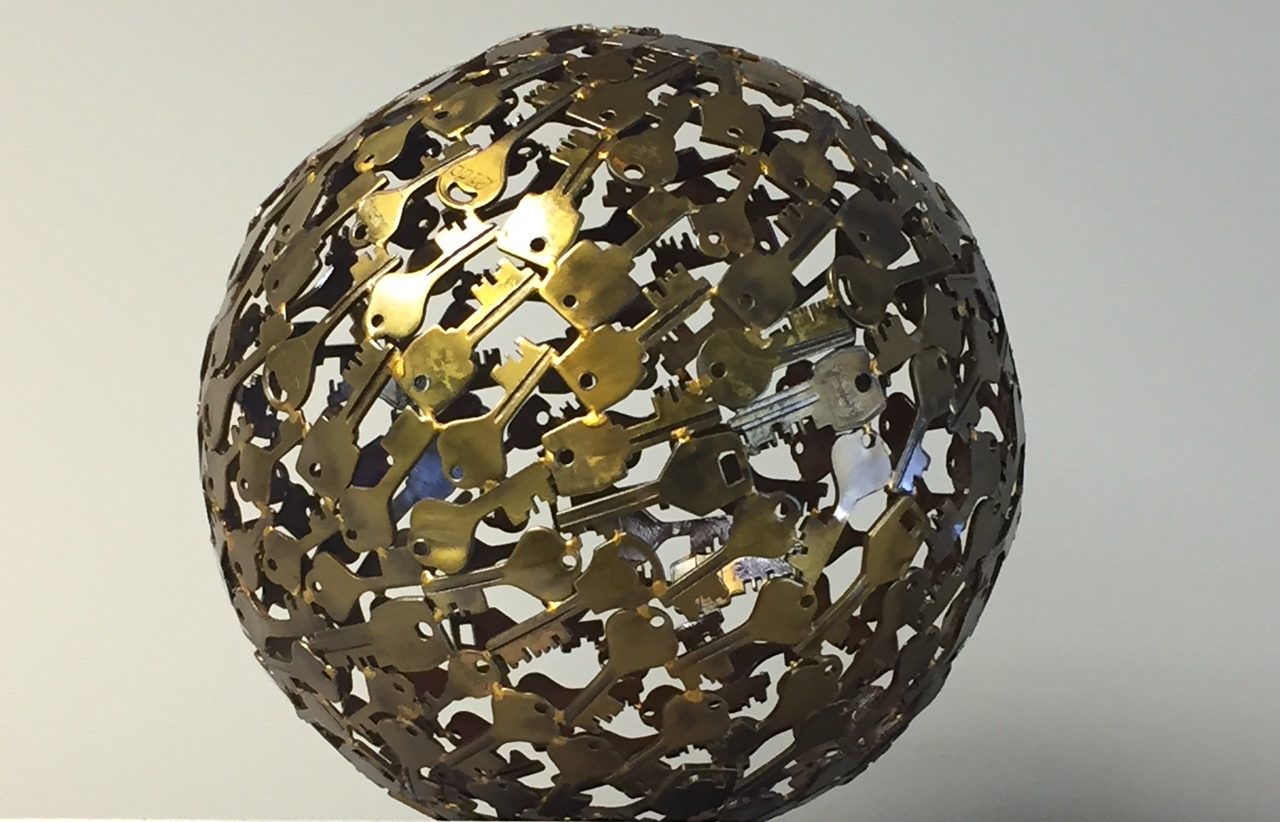

- Janus is the two-faced Roman god of doors, transitions, and new beginnings.
- January is named after Janus, symbolizing looking back and moving forward.
- Modern security relies on doors, frames, and hardware working as a unified system.
In ancient Roman religion and mythology, Janus was the god of gates and doors. The ancient Romans had a specific god who held the key, so to speak, to the metaphorical doors or gateways between what was and what is to come—the liminal space of transitioning out of one period of time and into something new.
Who is Janus?
It seems the ancient Romans had a god or goddess for everything: Poseidon, god of the sea; Venus, goddess of love and beauty; and Apollo, god of the sun. (Just to name a few. Other well-known Roman gods include Jupiter, Saturn, Mercury, Mars, Neptune, Orcus, Ceres, Juno, Luna Diana, and Vesta.) And then there’s Janus, a lesser-known god, but arguably one of the most important. In Roman mythology, Janus was the god of doors, gates, and transitions. Janus represented the middle ground between both concrete and abstract dualities such as life/death, beginning/end, youth/adulthood, rural/urban, war/peace, and barbarism/civilization. Janus was known as the initiator of human life, transformations between stages of life, and shifts from one historical era to another. Ancient Romans believed Janus ruled over life events such as weddings, births, and deaths. He oversaw seasonal events such as planting, harvests, seasonal changes, and the new year. According to Roman mythology, Janus was present at the beginning of the world. As the god of gates, Janus guarded the gates of heaven and held access to heaven and other gods. For this reason, Janus was often invoked first in ancient Roman religious ceremonies, and during public sacrifices, offerings were given to Janus before any other deity. In fact, there is evidence that Janus was worshipped long before many of the other Roman gods, dating all the way back to the time of Romulus (the founder and first ruler of Rome). And if you’ve ever wondered how the month of January got its name, you have Janus to thank. As the Roman god of beginnings and transitions, Janus is the namesake of January, the first month of a new year.
Why does Janus have two faces?
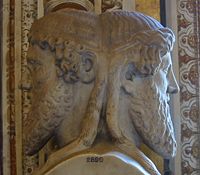
What is unusual about the god Janus is his iconic image. As the god of transitions and dualities,
Janus is portrayed with two faces—one facing the past, and one facing the future. He also holds a key in his
right hand, which symbolizes his protection of doors, gates, thresholds, and other separations or openings between spatial boundaries. In ancient Rome, the symbol of the key also signified that a traveler has come to find safe harbor or trade goods in peace.
What is a Janus coin?
Janus also oversaw the initiation of financial enterprises and humankind’s transition from barbarism to civilization.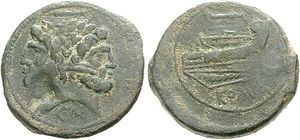 A major aspect of this was the creation of coins. Roman myth says that Janus was the first (among the gods or humans) to mint coins. Because of this, the image of his double-faced head appeared on many Roman coins. These coins can still be found in museums today, and representations of Janus coins are popular on jewelry.
Who is the Greek god of doors?
While most Roman deities have an equivalent in Greek mythology, there is no Greek god that serves as Janus’ counterpart. This can cause some confusion, leading people to wonder if Janus was a Greek or a Roman god. Greek myth does contain a character similar to Janus: Orthus, a two-faced dog. Similar to Janus, Orthus has one face looking to the past and one to the future. However, he didn’t have the same significance in ancient Greece as Janus did in ancient Rome.
How do you protect your doorways or honor transitions?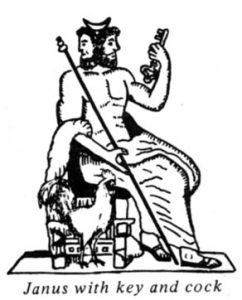
Though the traditions and worship surrounding the Roman god Janus were practiced long ago, similar practices endure today. Many Jewish homes, for instance, display a mezuzah on the doorway, following the commandment to “write the words of God on the gates and doorposts of your house.” Similarly, Christians often display a cross above the entrance to their home, and Muslims have specific rituals and greetings for entering a mosque. If you’re nonreligious, perhaps you display a meaningful photograph, picture, or symbol near your front door—a positive image or token that greets visitors to your home. Because events like season changes, a new year or month, birthdays, births, deaths, marriages, and even starting a new job are, in a sense, doorways between the past and future, it’s beneficial to honor them: Reflect on what you’ve experienced, plan and set goals for the future, celebrate change and transformation.
Get Help with Your Modern-Day Doors in Chicago
Just as the ancient Romans did thousands of years ago, we can maintain and create our own rituals to make the best of transitions and doorways both figurative and literal. While Anderson Lock can’t necessarily help you with your new year’s resolutions or big life transitions, we can help you with your actual door installations, locks, and keys. We serve the greater Chicago area. Contact us online, or call us at 1-800-323-LOCK. View Door and Frame Installation Services
And then there’s the Midwest wild card: severe thunderstorms, hail, and tornado warnings. In tornado alley season, you don’t want “mostly closes” or “kind of latches.” You want Commercial doors that close, latch, and control access the way they’re supposed to—every time—whether you’re locking up after a late shift or managing morning rush traffic spilling off I-294 and I-90.
Frequently Asked Questions
Who is Janus?
Janus is the ancient Roman god of doors, gates, transitions, and time. He’s most often shown with two faces, symbolizing his ability to look in two directions at once—back to what came before and forward to what comes next. That’s why he’s associated with thresholds and passages, where one state ends and another begins.
Why does Janus have two faces?
The two faces of Janus represent his ability to see both the past and the future. Any transition involves leaving something behind and entering something new, so Janus became the symbol of that in-between moment. It’s a fitting metaphor for doors, which simultaneously separate spaces and connect them—controlling movement while allowing it.
Why is January named after Janus?
January is named after Janus because it marks the transition from the old year to the new one. It’s the month built around reflection and planning: looking back on what happened and looking forward to what you want to change. In our region, it’s also when cold weather stress-tests doors, closers, and seals in a very real way.
What are common commercial door problems in Des Plaines?
In Des Plaines and the greater Chicago area, we commonly see warped frames from freeze-thaw cycles, rust and corrosion from road salt, misaligned latches due to building shifts, and failing door closers affected by extreme temperature changes. If your door only latches when someone pushes hard, or it starts slamming once winter hits, it’s time for an inspection before it becomes asecurity issue.
What are the most common failure points in commercial doors?
The most common failure points are the door closer (losing fluid or pressure), the hinges (wearing out from heavy use), and the latch/lock alignment (getting knocked out of place). Any one of these can keep a door from closing and locking securely. If you’re seeing repeat issues, schedule commercial door repairs so the entire opening works as a system again.
When should a facility upgrade to electronic access control?
Consider upgrading when managing physical keys becomes difficult, when you need audit trails of who enters and when, or when you need to grant or revoke access instantly without rekeying locks. This is especially helpful with staff turnover, multi-shift operations, and vendor access. Learn more about options like keypads and card readers through electronic access control solutions.