



Winter is coming in Chicago, and that means the furnaces kicking on and the perpetual battle between wanting to stay warm with trying to keep the heating bill from getting too high. What if we told you there was a way to save up to 30% on energy costs that is also one of the most affordable energy-saving upgrades?
Let us introduce you to a little thing called commercial weatherstripping.
With a name like Anderson Lock, it might seem like we only work on locks, right? WRONG. We’re also an industry leader in commercial doors and door hardware. And if you own or manage a property in Chicago or the surrounding region, you better know a thing or two about weatherstripping and door closers. Keeping your house and building warm begins with these two things. You want to make sure that your door is closing and sealing in a timely fashion. If it isn’t, that leaves more time for colder air to seep through. Now let’s dive deeper into weatherstripping.
What, Exactly, is Weatherstripping?
Weatherstripping isn’t just one thing — it’s more of a catch-all term for things that serve a similar purpose. Just like the word “seat” can refer to anything you might choose to sit upon, be it a couch, chair, or tree stump, “weatherstripping” refers to a group of weatherproofing solutions that block the flow of air around doors and windows.
When properly installed and maintained, commercial weatherstripping can significantly reduce your heating costs by keeping warm air in and cold air out especially during heavy rainfall or our Chicago snowstorms. Your heating system also won’t have to work so hard, meaning less wear and tear on it. It’s a simple solution, but it can increase the longevity of your building.
Without even knowing it, you’re already familiar with weatherstripping. It’s the foam tape you use to install a window unit air conditioner, the little brushes on the bottom of sliding doors, or the vinyl flaps that sweep the floor in a revolving door.
It’s a remarkably cost-efficient way to weatherproof your building.
How to Tell if You Have Air Leaks
If you own or manage an older building, chances are you’re well aware of where you have leaks and drafts. One tell tale sign is if you have snow collecting inside your window. There are other tests for less dramatic gaps and leaks.
If you can shake or jiggle the door or window, that indicates there may be gaps. Sometimes a gap is visible to the naked eye. If your HVAC costs begin to climb for no obvious reason, you may be starting to have some air leak issues. If you have tenants, they may report new cold spots or temperature issues.
If it’s not as obvious, use the Paper Test: Close your door or window on a piece of paper, then try to pull the paper out. If it requires some effort, then your existing seal is doing pretty good work. If it comes out pretty easily, then you probably have a problem.
For compression weatherstripping (any material soft enough for the door to compress to form a seal), test the pliability of the material with your fingers. If it’s soft enough to mold to the door, you’re in good shape. If it’s hard or brittle, then it is probably not working at max efficiency.
Know Your Types of Commercial Weatherstripping
While weatherproofing your building can include installing hollow doors or air lock/double entryways, weatherstripping refers to materials specifically designed to be installed on doors and windows to block airflow between your building’s interior and exterior.
Adhesive-backed Tape
Like it sounds, this rubber or foam weatherstripping literally sticks on your door or window.
Pros:
- Easy installation
- Great for irregular-sized openings
Con:
- Wears out quickly
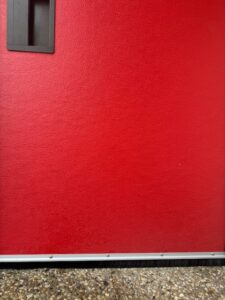 Door Shoe or Sweep
Door shoes are like little caps that go around the bottom of your door, and door sweeps are metal plates. Both are fitted with a sweep made of a pliable material like plastic, vinyl, or nylon.
Pros:
- Relatively straightforward installation
- Can be fitted to irregular or uneven doors
Cons:
- Good ones can get expensive
- Can be difficult to install — sweeps can require taking the door off its hinges and planing down the bottom to fit
- More visible than other forms of weatherstripping
- Sweeps can drag on carpet
Felt
Either plain felt or with metal reinforcement, this is stapled to your door at the point of the seal.
Pros:
- Inexpensive
- Widely available
- Easy to install, even DIY
- Budget-friendly option for low-traffic or low-use doors and windows.
Cons:
- Delicate, can tear easily (choose wool for more durability)
- Needs replacing every 1–2 years
- Cannot be exposed to moisture or a lot of friction
- Least effective weather proofing solution
Foam or Sponge
This is a compression material, meaning it works by being smooshed into place. It can be adhesive backed (see above) or reinforced with wood or metal.
Pros:
- Great for corners and irregular-shaped cracks
- Tape is easy to apply
- Relatively inexpensive
Cons:
- Not super durable (choose reinforced neoprene or vinyl for more durability)
- Not great in areas exposed to weather
- Can be tricky to install
- Visible
- Produces greenhouse gases to manufacture
Interlocking Metal
This provides the best seal because it uses two pieces of material, one on the door or window and one on the frame. As you can imagine, it is more expensive and more complicated to install, but it is also very durable.
Pros:
- Very durable — can last for decades
- Superior seal
- Does not interfere with door or window operation
- Great option to match the aesthetic of older homes
- Will pay for itself in a short time
Cons:
- The most expensive option
- Requires skilled installation
Magnetic Weatherstripping
These involve a compression material like vinyl or rubber attached to a magnet installed on the door jamb. When you close your metal door or window, the magnet creates a strong seal.
Pros:
- Very effective, air-tight seal
- Durable
- Can also dampen outside noise
Cons:
- Only for metal doors and windows
- An expensive option
Pile Weatherstripping
You’ve probably seen these short, thick brushes on sliding doors or windows. They are made of dense fibers attached to a metal strip.
Pros:
- Flexible
- Efficient
- Quiet
- Durable when installed and maintained well
Cons:
- Require skilled installation
- Tend to collect dirt
- Wear down over time
Rolled-Vinyl Gasket or Tubular Rubber
This compression weatherstripping has an adhesive back and is installed so that your door or window presses against it when shut.
Pros:
- Reasonably durable and weather resistant
- Moderately priced
Cons:
- Can be a little tricky to install; tape may not adhere to metal
- One of the most visible forms of weatherstripping
Tension-Seal / V-Strip
These are made of more durable materials that are folded back on themselves in a V shape that compresses when the door is closed.
Pros:
- Durable and long-lasting
- Great for retro-fitting older homes
- Nearly invisible
- Can be among the most effective forms of weatherstripping
Cons:
- Requires skill to install
- Surfaces must be flat and smooth
- Can make doors and windows more difficult to open and close
- Can cost more than other options
Frost-Brake Thresholds
These use a material like vinyl or silicone as internal “brakes” inside the metal threshold that makes it more difficult for heat to move through the metal. Another version features tubular vinyl on top of the threshold to create a compression seal.
Pros:
- Installed at floor level where cold air settles
- Prevent freezing in your threshold which can lead to mold and damage
Cons:
- Requires skilled installation
- Typically requires replacing the whole threshold
Looking to Cut Costs This Winter and Stay Warm?
Many kinds of weatherstripping appear easy enough to install on your own, but if you’re managing a building with a large amount of doors and windows and high HVAC costs, then you want to hire professionals. It’s not worth the time and effort to install weatherstripping if it doesn’t actually stop airflow and save you money.
A professional will know where to look for gaps and how to detect leaks that you may have missed. Then, they will know how to handle uneven surfaces or difficult corners, leading to tighter seals and greater efficiency.
At Anderson Lock, our reputation is built on reliable service, partnering with our customers, and making large orders and installs go smoothly. Our door technicians have experience with everything from new school and facility construction to retrofitting old Chicago-area apartment buildings. They also have a reputation for thorough estimates and accurate ordering, helping you stay up to code, on time, and most importantly how to be cost effective.
To help find an affordable weatherproofing solution, contact us today!