



You probably expect an article about preventing unauthorized access to your building with talking about door locks and security cameras. Those things are important, but do you know the biggest reason the wrong people get into multi-tenant buildings?
 Your tenants.
That’s right: The people who have the most to lose from unwanted thieves or vandals are also the most likely to let those people in.
And it’s not because they’re irresponsible or lazy — far from it! It’s because they think they’re being nice when they let someone in who says they lost their key or are visiting a friend.
Of course, as the property manager, you can’t control your tenants. But that’s exactly why it’s so important to take steps to control what you can. We here at Anderson Lock can help you with each step of the way.
In this article, we’ll walk you through the basics of multi-unit building security.
Security Challenges and Risks for Multi-Tenant Buildings
We always stress the importance of taking a multi-layered approach to building security. This is because there are often many points of vulnerability, and redundancies can aid in prevention and investigation.
Multi-unit buildings typically share several security challenges and risks:
- Social barriers It can be difficult for tenants to get to know one another due to building design, the number of units, or turnover.
- Personal and cultural norms Each tenant comes with their own set of habits and assumptions about living in a multi-unit building.
- Physical keys Physical keys can be lost, duplicated, or stolen. If you need to change the locks, the building will be vulnerable until the installation date.
- Tailgating Thieves will try to slip into the building behind a tenant before the door closes fully.
- Social engineering Thieves can manipulate people’s desire to be helpful to get buzzed in or let in.
- Cleanliness and lighting If you do not maintain your building and keep it well lit, it sends a signal to would-be thieves that it may be an easy target.
- Physical state of the building Especially with older buildings, you must ensure that all entry doors and gates close and latch properly.
Steps to Improve Multi-Tenant Security
Preventing unwanted access comes down to addressing each of the above vulnerabilities. Fortunately, there are many tactics that will address more than one weak point. And if you use a properly multi-layered approach, some tactics will overlap with one another for increased effectiveness.
 Comprehensive Security Audit
We never get tired of talking about conducting a proper comprehensive security audit. Without a thorough audit, you cannot make the most effective choices for your circumstances — and you risk wasting time and money and losing the trust of your tenants and/or board.
A security expert can assist with your audit to ensure the most accuracy and effectiveness.
Physical Security Upgrades
For most multi-tenant situations, prevention begins with physical security. Physical security encompasses both the state of your building and your security hardware. Good optics tells would-be thieves someone cares about the property. Good hardware ensures they couldn’t get in even if they tried.
- Keep your building clean and landscaped The first and easiest thing to do is to properly maintain your building. Repair broken doorways and windows. Repaint your exteriors when they need it. Keep the grass mowed and the bushes trimmed. Repair potholes in any parking spaces.
- Adequate lighting and visibility Make sure your tenants can see in the parking lot, entranceways, stairwells, and hallways. When possible, avoid having obstacles to clear lines of sight in public spaces.
- Reinforce entry points This is where we can come in. Properly hang (or rehang) your doors. Maintain and replace locks when they need it. Install properly functioning closers and panic bars where required.
Electronic Access Control Systems
Take physical keys out of the equation with electronic access controls. These systems ensure only authorized people gain access by requiring:
- A passcode
- A phone app
- A fingerprint
From the point of view of property management, electronic access control systems are incredibly convenient: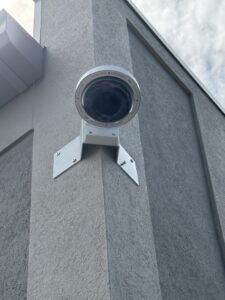
- Manage them from your phone
- Assign and revoke credentials in no time at all
- Set credentials to only work during certain times of day — especially useful for delivery people
- Get a real-time log of who is using what entries and at what time
Security Cameras
Security cameras add a final protective layer that can both deter unauthorized visitors and aid in investigation. Cameras can be larger and more prominent for deterrence or small and discrete for quiet monitoring.
Visitor Management & Screening
Larger buildings need proper visitor management protocols. Establish a clear process that requires visitors to present an ID and explain the reason for their visit. Record and track these visits using digital tools. Train your staff on all your protocols.
A Got-Your-Back Culture
The more units you have, the easier it is for tenants to feel anonymous and like their behavior doesn’t matter. Of course, the reverse is true: When people share a space, they can keep one another safe by following simple security protocols.
As the property manager, you can set the tone for the community of your building.
- Set expectations Provide simple instructions to new tenants on how to keep the building secure.
- Remind your tenants Send periodic reminders to residents to establish baseline expectations for security.
- Educate tenants Counter tailgating and social engineering by educating your tenants about what they are and what to do when they encounter someone unfamiliar trying to access the building.
- Inform your tenants Keep your tenants in the loop when you discover a security incident such as an unauthorized person getting into the building or a door being left propped open. Factually explain what happened, remind them of the protocols, and emphasize the importance of everyone taking responsibility. People will do their part more when they know you are paying attention, too.
Keep things positive. Encourage residents to have a “got-your-back attitude” of looking out for one another.
 Regular Audits and Updates
The last step is to conduct security audits as a regular part of your maintenance procedures. Security is not a “set and forget” thing. You don’t need to obsess about it night and day, but you should conduct quick check ups at least once a year, and encourage residents to report issues like poorly shutting doors or dead light bulbs.
Securing your multi-tenant building against unauthorized access involves establishing a thoughtful multi-layered security approach that includes both proper hardware and technology and communication with your tenants.
Our security experts are on hand to conduct security audits, help you select the right hardware and technology, and plan and execute a successful installation. Call us today to learn what you can do to protect your property.
FAQ: Preventing Unauthorized Access in Multi-Tenant Buildings
What is the most common cause of unauthorized access in multi-tenant buildings?
In many properties, the biggest vulnerability is everyday resident behavior. Tenants often let in someone who claims to be visiting or who says they lost their key. Tailgating and social engineering are major contributors to unauthorized entry, which is why resident awareness is just as important as strong hardware.
What is tailgating and how can property managers reduce it?
Tailgating occurs when an unauthorized person follows a resident through a secured door before it closes. You can reduce this risk by ensuring doors fully latch, installing quality closers, using electronic access control, posting clear signage, and regularly reminding residents not to hold doors for unknown individuals.
Why are physical keys considered a security risk in multi-tenant buildings?
Physical keys can be lost, copied, or stolen. Rekeying after a lost key can be time-consuming and expensive, and buildings may remain vulnerable in the meantime. Electronic credentials allow property managers to quickly revoke or reassign access without changing hardware.
Is electronic access control worth it for apartment or condo buildings?
Yes. Electronic access control systems improve both security and convenience. Property managers can assign and revoke credentials instantly, set time-based access for vendors or deliveries, and review entry logs. These systems also help reduce risks associated with lost keys and unauthorized duplication.
Where should security cameras be installed in a multi-tenant building?
Cameras are most effective when placed at main entrances, secondary entry points, parking areas, loading zones, and interior common spaces like lobbies and corridors. Proper placement improves both deterrence and post-incident investigation.
What physical security upgrades make the biggest impact?
High-impact upgrades typically include properly aligned and latching doors, commercial-grade locks, functioning door closers, reinforced entry points, and adequate exterior and interior lighting. Well-maintained buildings also signal active management, which can deter opportunistic crime.
How important is tenant education for building security?
Tenant awareness is critical. Even the best hardware can be undermined by poor habits. Property managers should provide move-in guidance, periodic reminders, and clear expectations about not allowing unknown visitors into the building.
What should a multi-tenant security audit include?
A thorough audit should review door and hardware condition, access control coverage, lighting levels, camera placement, tailgating risks, and overall building maintenance. The goal is to identify weak points and prioritize upgrades that deliver the greatest risk reduction.
How often should multi-tenant buildings review their security?
Security should be reviewed at least annually, with additional checks whenever there is tenant turnover, a security incident, or major building changes. Regular reviews help catch failing hardware, lighting issues, or emerging vulnerabilities early.
Can older multi-tenant buildings still be upgraded effectively?
Yes. Many older buildings can significantly improve security through targeted retrofits such as upgraded door hardware, modern access control, improved lighting, and better entry management. Full door replacement is often not required.
How can Anderson Lock help improve multi-tenant building security?
Anderson Lock provides comprehensive security audits, commercial door and hardware upgrades, and electronic access control solutions tailored to multi-tenant properties. Our team helps property managers identify risks, prioritize improvements, and implement reliable, code-compliant security upgrades.