



A tenant moves out, you have to evict a tenant, a tenant disappears, someone breaks into a unit… For Chicago-area owners and property managers, the situations that raise the question of whether to rekey or replace a lockset range from inconvenient to scary — and in some cases, costly. While rekeying may be the most attractive option because it’s quickest and the most affordable up front, there are times when replacing saves time and hassle down the road. So, how do you decide?
How to Choose: A Short Decision Tree
If you’re dealing with an unusual incident such as an eviction or break in, we can cut to the chase with this decision tree. We’ll unpack these choices below.
Rekey or Replace Decision Tree
- Is the hardware damaged, worn, or otherwise not working properly?
Yes: Replace
No: Go to Step 2 - Was there a break-in or some other unauthorized entry, especially as a result of an inadequate or ineffective lock?
Yes: Replace
No: Go to Step 3 - Was there a break-in or unauthorized entry involving stolen keys?
Yes: Rekey
No: Go to Step 4 - Is the lockset mismatched or out of date for your current master key or access control plan?
Yes: Replace
No: Go to Step 5 - Is the sole concern compliance and the next tenant’s security?
Yes: Rekey
Note: If the lock is on a labeled fire door or under any other code, always make sure any changes, especially lock replacements, keep the door up to code.
Do You Have to Rekey or Replace At All?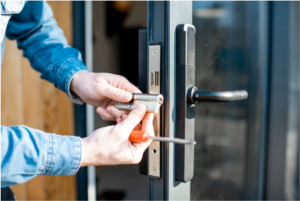
The short answer is yes.
If you have had any incident affecting the security of the unit, you cannot simply cut new keys and wash your hands of the situation. This includes:
- Lost keys
- Tenant turnover
- Eviction
- Tenant abandonment
- Locks changed by tenant, with or without permission
- Damage or wear prevents lock from operating properly
- A break-in or unauthorized entry involving the lock itself
Illinois law requires that you replace or rekey your locks before a new tenant moves in (765 ILCS 705/15).
In other words, it doesn’t matter if you’re confident you have all the old keys or even if you were the previous tenant; you have to change the locks enough that they require a new means of entry. You could even be held liable if your failure to do so results in theft from that unit.
Do You Have to Replace the Locks After Any Break-In?
The short answer is no.
The important question is how the break-in occurred. If the perpetrator had access to keys or somehow operated the lock properly, then it is enough to rekey the lock.
If the perpetrator was able to pick or bump the lock because it was old, defective, or inadequate, or if the hardware was damaged such that it does not operate properly, then you should replace that lock.
If you’re unsure the damage affects the lock’s proper operation, it’s best to call us or a trusted locksmith to take a look.
Rekeying and Replacing: What’s Involved
Now that we’ve looked at the most urgent questions, let’s take a wider look at the several factors involved in the decision to rekey or replace.
What Rekeying Means
The part of the lock that receives the key is called the cylinder, and inside the cylinder are a series of pins that are pushed up to different degrees by the ridges on your key. Rekeying involves removing this cylinder and reconfiguring the pins so that the lock requires a new key profile to operate.
Rekeying makes previous keys useless. It is an easy and cost-effective means of securing a unit, and any locksmith can help you with it.
When to Rekey
When there is no concern about damage to the lock, rekeying is your best bet. This is the obvious choice when you’re prepping for a new tenant or for key control, i.e., tracking who has physical keys to your building or unit.
Rekeying is especially useful if you’re using a master key system, since to replace the lock would require ensuring the new hardware could fit seamlessly into your existing system. Be sure to communicate with your locksmith about your master key hierarchy, as rekeying a lock the wrong way can break your whole system.
In a commercial building that has been in operation for a long time, you likely have a messy key history. Rekeying can be a great reset for your key control system.
Do You Need the Original Key?
You do not need the original key to rekey a lock so long as the locksmith can disassemble the lockset. If the door is locked shut, however, then your locksmith may have to pick the lock first, to open the door.
What Replacing Involves
Replacing the lock may mean more than just swapping out the hardware that’s mounted in your door.
In some cases, the door may need to be modified slightly for the new lock. The bore holes (where the lock cylinder and latch fit in) may need to be drilled out or padded. The wood may need to be reinforced on the edge of the door. This is especially true for older Chicago-area buildings where hardware may have been replaced many times.
Sometimes, you will also need to replace the strikeplate (where the door hits the jamb), which may also require some prep once the old plate comes off.
When to Replace
As we’ve said, you should certainly replace a damaged or malfunctioning lock — rekeying isn’t going to provide the security you need. Older locks or locks on high-traffic doors can begin to jam or bind. A locksmith can tell you whether some maintenance will be adequate or if it’s time to replace it.
The other times you will want to replace are when the existing lock hampers or interferes with your larger access control system. For example, you may have updated parts of your building and put off updating the rest. Or perhaps the existing lock is adequate but lacks features that would integrate it better with your system. This may be the right moment to make an investment that will improve the building’s overall security as well as its curb appeal.
Note that it’s often possible to upgrade to electronic access controls without replacing the whole door with modern retrofitting options.
Ask an Anderson Lock Expert
Whether you know what you want to do or need an expert opinion, Anderson Lock’s lock technicians are here to help. You should definitely work with an expert if you’re rekeying; trying to do it yourself will be more hassle than it’s worth.
You may be able to replace straightforward locksets on your own. If you’re upgrading, however, and the door needs specific prep, or you have an electronic access control system, we recommend leaving that to the experts rather than damage your door or waste a lot of time troubleshooting a malfunctioning electronic lock.
Call us today to speak with a technician to find the best solution for your property.