



- Many older doors can be retrofitted for modern electronic access control without full replacement.
- Retrofit upgrades can help preserve historic character while improving security and convenience.
- A professional assessment can determine whether retrofit or full door replacement makes the most sense.
Don’t think that just because your building is on the older side you can’t have nice new things. Many modern electronic access control systems can be retrofitted to older, in-market doors with minimal impact, preserving your building’s historical integrity and charm. And if you own or manage an older building in the Chicago area, you have an experienced partner in Anderson Lock. We’ve been retrofitting older doors with access controls for years.
Understanding Access Control Systems
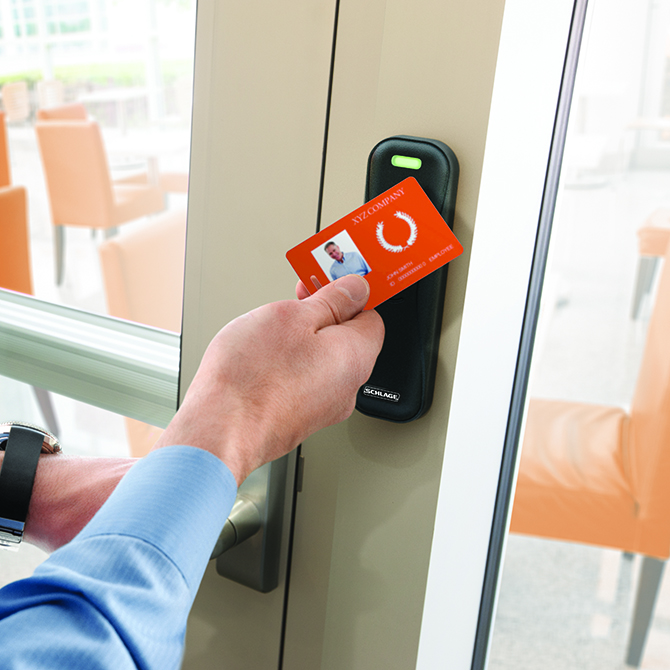
“Access control” is an industry term that emerged with the development of more sophisticated electronic locks and network capabilities.The familiar lock-and-key setup most buildings have is an analog access control system; one that dates back to the ancient Assyrians, in fact.
Modern access controls, often called smart locks, use electricity to power keypads and sensors that give you more control. When we say “access control,” we often mean the device itself. When we say “access control system,” we mean the whole set of devices, software, and processes you use to manage:
- Who can gain access
- Which doors they can use
- When they can do it
- How they do so
Challenges for Upgrading Older Buildings with Electronic Access Controls
Chicago and the surrounding region boast many beautiful government and commercial buildings and multi-unit residences, but many of the most historic ones predate modern safety and accessibility standards, not to mention consumer demands.
Upgrading access controls for older buildings may involve facing challenges like:
- Non-compliant hardware: Knobs that are too hard to turn or inadequate closers that are too fast.
- Tight spaces: Doorways can be narrower than code. The layouts of vestibules, foyers, and halls can create problems for fire and egress codes.
- Old-fashioned construction: Older doors and frames were not designed to route power or data cables through them.
- Historical features: Decorative doors, trim, vision lites, and even hardware that you want to preserve as long as possible.
Especially for commercial, government, and school buildings, you face the additional challenge of increasing user demand for more modern access control systems regardless of the obstacles.
What “Retrofitting” Really Means
The good news is that upgrading to electronic access controls often does not require completely replacing your doors and frames. Retrofitted access controls can be fit into your existing doors and frames with minimal to no modifications. This may involve:
- Replacing a mechanical lock with an electronic lockset that fits your existing door prep
- Mounting readers or keypads on doors, frames, or exteriors, panic and egress hardware on doors, door closers
- Wiring the door to power an electronic access control or an automatic door closer
Will retrofitting alter my doors?
We strive to make as few modifications as necessary.
But in the case of some older buildings, especially when hardware has been replaced many times over the years, the door or frame may require some additional prep so they can accept the new hardware without losing integrity.
“Door prep” can involve coring (reshaping the holes the lock and latch fit into), drilling new mounting holes, and running wire to the door and frame, depending on the lockset.
Rest assured we will explain any modifications prior to making them.
Benefits of Smart Lock Retrofit Upgrades
Retrofitting your older building with access control hardware saves you the expense of replacing the doors altogether for more modern doors that are designed for modern controls. In other words, it’s a lot cheaper.
Retrofitting causes much less disruption for tenants, students, patients, etc. in terms of dust, demolition, and entryway downtime than replacing the whole door.
And for many of our Chicagoland customers, the biggest benefit is preserving the historic character of their building while still improving safety and usability.
When Retrofitting Makes Sense
In general, retrofitting does make sense as the first option to consider when upgrading to modern electronic access controls. Retrofitting is usually a good option when:
- Your doors are in good physical and operating condition
- Your doors meet any fire rating requirements
- Existing frames can support surface-mounted hardware and wiring
- Your doors and frames can handle minor coring or drilling if necessary
One of our access control experts can help you assess whether your doors are good candidates for retrofitted access controls.
Signs You May Need to Replace Your Doors
In some cases, a retrofit is not the best solution, and the only way to upgrade your access controls is to replace the doors altogether:
- Structural or safety issues: If your door is warped, rotted, or heavily damaged, retrofitting the lockset will not be enough to ensure security. By the same token, if the door does not meet fire ratings requirements, a retrofit can’t help you.
- Incompatible construction: Some historic doors and frames are too thin or delicate to handle coring or drilling that may be required for a retrofit.
- Comprehensive system upgrades: If your project involves major renovations to your whole building, it may make more sense to simply replace the doors at the same time.
Note that the ADA codes make provisions for certain protected historic properties, so you may not need to replace a whole door to remain compliant if your building falls under the provisions.
A Quick Retrofit Building Assessment
Before deciding whether you can retrofit your access controls or have to replace your doors, take some time to do a quick assessment, and then call an expert to compare notes.
Some questions to ask:
- How many doors need upgrades?
- What state is each door in?
- What purpose does each door need to serve?
- Which codes apply to each door?
- What upgrades are planned for the future?
Save Time and Hassle with an Expert Consultation
With over 60 years of service to the greater Chicago area, we’ve about seen it all, so working with one of our expert technicians can save you loads of time, hassle, and money.
Contact us today to learn more about retrofitting your older building.
Frequently Asked Questions
Can older doors really be retrofitted with electronic access control?
Yes. In many cases, older doors and frames can be upgraded with electronic access control hardware without full replacement, depending on their condition, construction, and code requirements.
Will retrofitting an access control system damage historic doors?
Not necessarily. Retrofit projects are typically designed to minimize modifications, although some doors may need coring, drilling, or other prep work to accommodate modern hardware.
When is door replacement a better choice than retrofitting?
Replacement may be the better option when a door has structural damage, fails fire-rating requirements, cannot support retrofit hardware, or is part of a larger renovation project.