

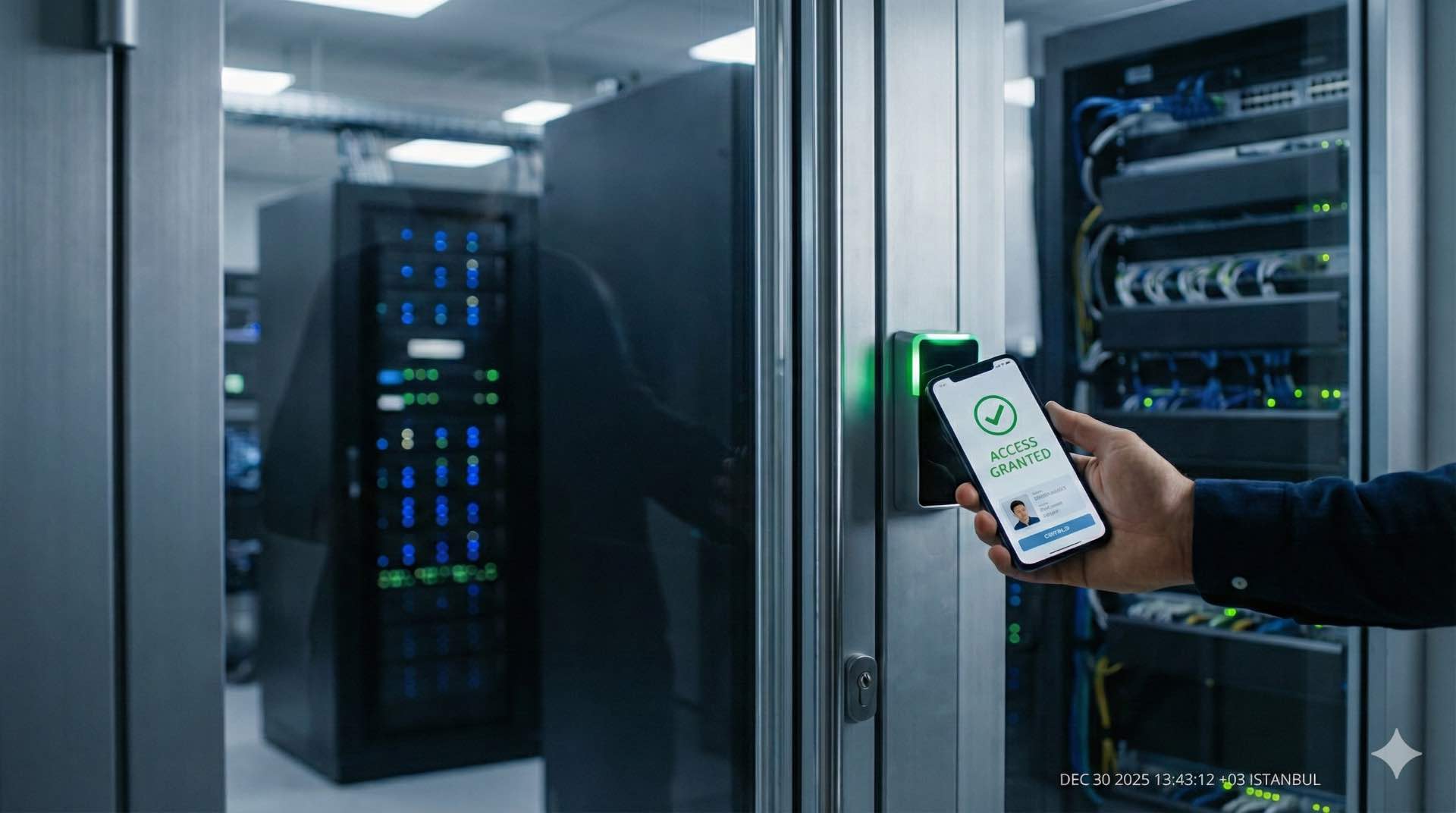

7 Best Practices for Your Data Center Access Controls in 2026
Physical security problems may not feel as urgent and disruptive as cybersecurity breaches, but they’re just as important to prioritize for protecting your data center. Any security system is only as strong as its weakest point, and cybersecurity is only as strong as your physical security. That’s why our security experts stay up to date on the best practices for mission-critical data center access controls.
Electronic access controls boast great advantages in security and monitoring, but they also introduce complexity. The National Institute of Standards and Technology provides nearly 80 pages of access control assessment criteria, but for purposes of this article, we boiled things down to 7 practices that cover most of your bases.
7 Data Center Access Control Best Practices in 2026
1. Take a Multi-Layered or Defense-in-Depth Approach
We often recommend a multi-layered security strategy to our commercial customers, and we believe it’s even more important for mission-critical facilities like data centers.
 You’re probably already taking a defense-in-depth approach to the digital access points to your data. Physical security is a natural and necessary extension of that, and it can be broken down into four main layers:
- The Perimeter Property-line physical and psychological deterrents like fencing, lights, and visible security cameras.
- Facility Entry The primary choke point where individual entries must be monitored with CCTV and electronic access controls.
- The Data Hall Increasingly, facilities are using multi-factor authentication (MFA) for access to the data hall, requiring “something you have” (badge, fob) and “something you are” (biometrics).
- The Racks Security at the level of the cage and cabinet, especially in colocation facilities. Credentialing and other electronic access control features can ensure a technician only has access to specific servers.
2. Adopt a Zero Trust Physical Access Model
“Zero Trust” can sound impersonal, but from a security point of view, it’s a way of treating everyone in a company equally regardless of position. Security at every entry point depends on need for access and the principle of least privilege rather than your acronym.
Anti-passback technology and the Two-Person Rule are great examples of this. Anti-passback tech requires an exit scan before a badge can be used again. The Two-Person Rule ensures people do not enter restricted areas alone.
3. Deploy Biometric Access Controls
To meet modern data center security standards (like NIST SP 800-53A), many data centers are turning to biometric inherence access controls such as fingerprint readers, facial recognition, and iris scanners, either as the primary access credential or as part of an MFA protocol.
4. Maintain Granular, Real-Time Audit Logs
Detailed or granular audit logs not only help you investigate breaches, they can be critical for meeting regulatory standards such as SOC 2. Today’s most advanced electronic access controls keep real-time data on:
- The identity of the individual
- The specific door or rack accessed
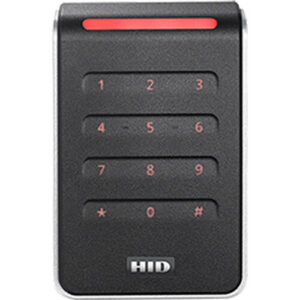
- The precise timestamps of entry and exit
- Any unsuccessful attempts to gain entry
5. Install Electronic Access to Racks and Cages
Rather than deal with the administrative and logistical hassle of physical keys, use networked access controls on your cabinets and cages. This allows you to control and monitor who gains access and when as well as offering remote lockdown capabilities.
Networked access controls integrate with your data center infrastructure management (DCIM) software, which lets you manage access across thousands of racks from a central dashboard.
6. Align with Global Compliance Standards
Compliance certificates and badges signal trustworthiness to your clients. The most widely accepted standards cover physical security and your access control systems.
- SOC 2 Sets standards for authorizing users and documenting access, including:
- Logical access – User credentials, assigned privileges, process integrity
- Physical access – Access cards, biometrics, security cameras, restricted entry points
- ISO/IEC 27001 Defines “Secure Areas” with controlled entry points and includes:
- Deterrent controls – Visible cameras, bright lighting, physical entry controls such as barriers, gates, staffed gate houses and reception areas
- Detective controls – Alarms, motion sensors, security cameras, security guards
- Preventive controls – Fences, staffed gates, and access control systems
7. Partner with a Lock & Security Expert
Expertise in cybersecurity or facilities management or running a business is not the same as expertise in physical access security. No matter how cutting-edge your system, it will be useless if it’s not installed and programmed properly. Even the way your physical doors hang in the frame matters. Contact Anderson Lock to install and maintain your doors, door hardware, and electronic access controls.
Investing in People is Mission Critical, Too
We’re a lock and door security company, but we’re also a family-run business, and we know that the safety and success of our business depends upon the people on our team.
It’s a truism that people are the weakest link in your security. Knowing what to do and actually doing it are different things, and on top of that you have all the social engineering like tailgating and pretexting.
This is a leadership issue because it’s about understanding people. We can partner with you to maintain a robust defense-in-depth security system, but it’s up to you to create a culture of security where everyone feels ownership of your security protocols. Don’t neglect this important security layer!
The Future of Data Center Security
It’s still early in 2026, and we can expect that digital tools and AI will only further entwine physical and logical security. Watch for artificial intelligence tools that will analyze access patterns to identify weaknesses and aberrations and even to predict and prevent unauthorized entries.
But the foundation of physical security will always be the physical hardware, so you need protocols for continuous auditing, testing, and refining.
Protect your mission-critical infrastructure with an expert physical security and access control survey by an Anderson Lock estimator. Contact us today to design a custom multi-layered, compliant access control system for your facility.