


Why New Locks Fail on Old Openings

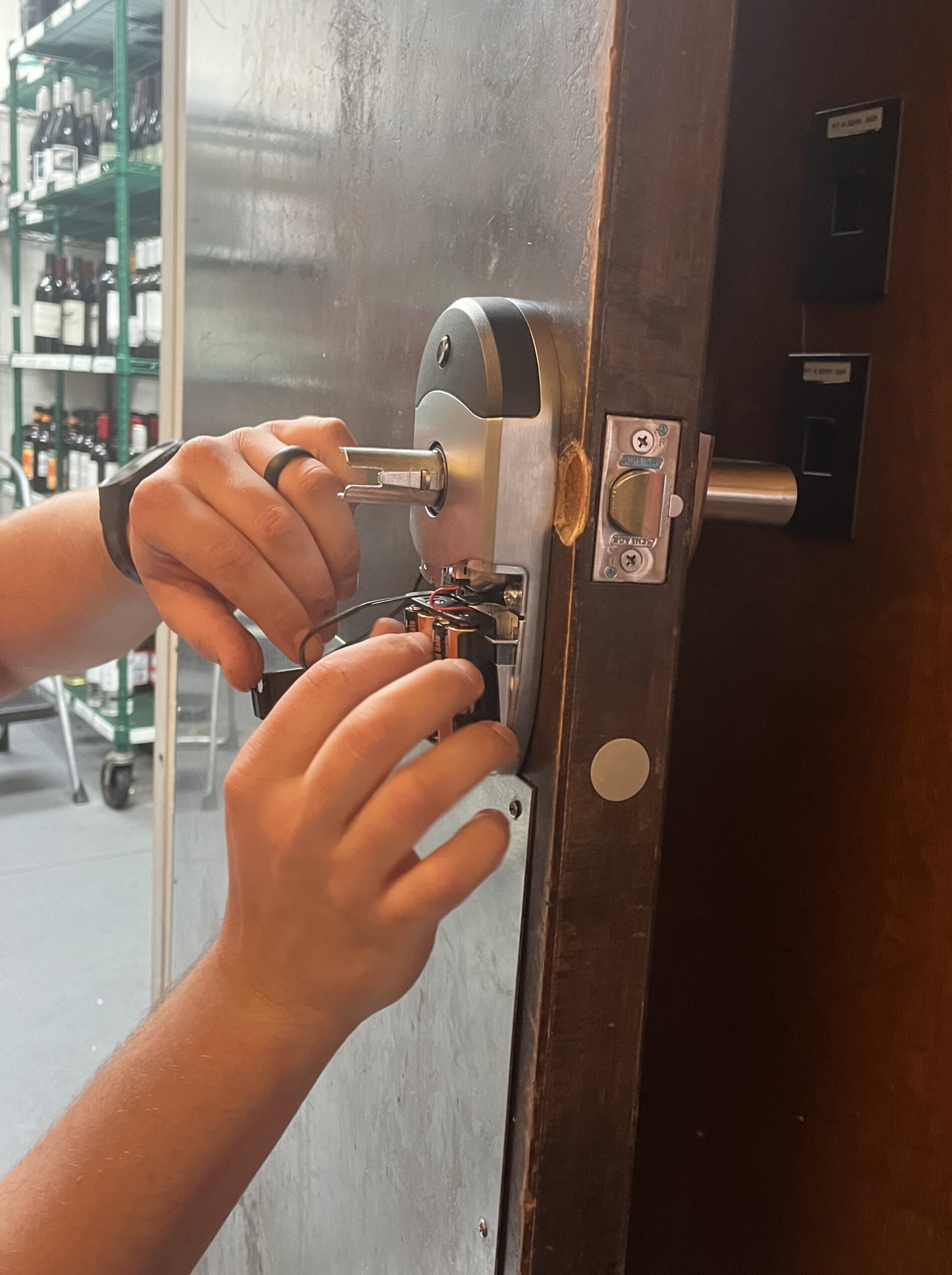
This is a frustrating situation for you and your tenants both: A tenant flags an entryway because the door isn’t latching properly. You send your maintenance guy out, and he replaces the cylinder or maybe the whole lockset. A couple months later, and the same door is sticking or dragging and not closing right again. Is it a bad lock? Poor installation? The Chicago humidity kicking in?
It’s often not the lock.
New locks fail on old openings when frames are out of plumb, doors are hung incorrectly on their hinges, or hardware is mismatched. That’s why Anderson Lock teaches facility managers to inspect the opening, not just the lock. The highest-grade commercial lock is only as good as the weakest element in the whole opening apparatus.
Why isn’t my new lock working on my commercial door?
A new commercial lock may fail to latch or secure a building if any of the surrounding door components (e.g., the door leaf, frame, hinges, door closer) do not function properly. Before replacing the lock, conduct a complete-opening inspection to identify the true root cause.
Defining a “Complete Opening”
Commercial doorways have to balance aesthetics, convenience, functionality, safety, and security. They can sometimes look simple, but the best ones are precisely tuned mechanical assemblies.
While we commonly use the word door to mean the piece of wood, glass, or metal that swings open and shut on hinges, in the industry, door means the whole assemblage, also called the opening or sometimes, when speaking with customers, the complete opening.
In non-technical terms, everything that swings, springs, clicks, or sticks, and everything that connects those things to your building, is the complete opening.
The complete opening consists, at minimum, of:
- The door leaf or slab (what we usually just call the door)
- The door frame
- Hinges
- Lock assembly, including the latch, cylinder, lever or knob, and the strike plate that attaches to the frame
Depending on the specific door, you may also have:
- Deadbolt
- Threshold
- Gasketing and weatherstripping
- Exit hardware (e.g., panic bars, request-to-exit device)
- Electronic access control, including power source
- Door closer
And if you really want to get in the weeds, there are vision lights and transoms and such, but for our purposes in this article, we can focus on the parts that involve opening, closing, and locking.
Common Opening Problems That Defeat The Best Locks
It’s easy to assume the lock is the problem because it’s what we interact with the most. It’s also one of the most complicated parts of the door, so it’s easy to jump to the conclusion that something is wrong with components you don’t understand.
As The Steel Door Institute confirms, most problems with commercial steel doors are not because of problems with the lockset but because of “inappropriate application of the products and/or improper installation.” Wooden doors and door frames can experience seasonal or weather-related swelling and contraction, sagging, warping, and rotting.
Again: inspect the opening, not just the lock.
Before spending the time and money to replace a lockset, do a root-cause analysis to make sure you’ve ruled out other factors.
| Door Symptom | True Opening Root Cause |
|---|---|
| Key is difficult to turn | Latch bolt is grinding against a misaligned strike plate |
| Latch misses strike | Misaligned strike plate, loose hinges, warped slab, twisted frame |
| Door rebounds or bounces | Door closer speed set incorrectly, gasketing too stiff |
| Need to pull door shut | Inadequate closer force, dragging against threshold, wind pressure |
| Spotty card reader failure | Door not aligning with electric strike when at rest |
| Scraping/dragging | Loose hinges, frame out of plumb or cross-legged |
The Chicago region’s humid summers, high lakefront wind pressures, and harsh winters can put extra wear and tear on doors, stressing door frames, altering the fluid viscosity of closers, or corroding slabs and frames. Don’t underestimate the potential impact of the Chicago climate, especially on exterior openings.
Why Replacing Only the Lock May Waste Money
While precision matters, it’s true that many doors will function more or less adequately if the leaf sticks or the frame sags a little. But while you may think you’re only putting up with some added inconvenience, you could be wasting money now and incurring greater costs in the future.
To begin with, an improperly aligned door may have gaps where it meets the frame that can leak light and air. At minimum, this compromises the energy efficiency of the opening and hits your energy bills. In some factory settings, this could mean quality control or even safety issues.
Long term, a door that drags, sags, scrapes, or binds is putting irregular pressure on the hardware. You may be stretching a spring, shearing a latch pin, or stripping screws in your hinges — all problems that will incur cost later and potentially leave that opening exposed and you unprepared.
Accessibility, Egress, Life-Safety, and Fire Door Issues
Then, of course, there are legal, compliance, and safety reasons to keep your doors’ complete openings in good working order.
- Accessibility/ADA compliance A door that sticks or drags may require more than the 5–8 ½ lbs. of force to operate. (Get a quick guide to ADA compliance here.)
- Egress/Life Safety Codes like NFPA 101 require that doors in the path of egress — that is, the way out in an emergency — must be in good condition, function properly, and meet certain clearances for fire and smoke protection. Gaps in the frame or dragging could create safety problems and expose you to liability.
- Fire-rated Doors Fire doors have specific requirements related to path of egress as well as how they close and their ability to function as part of a fire barrier. A door that doesn’t close or latch properly can lead to a failed fire door inspection.
N.B.: Your specific municipality may have other relevant codes for your building type; consult your local authority having jurisdiction (AHJ). Anderson can help navigate these codes, too!
What a Professional Complete-Opening Inspection Checks
When you work with an Anderson Lock technician, we’ll inspect the opening, not just the lock. You should expect as much from any locksmith partner.
A complete-opening inspection will check:
- Door leaf integrity
- Hinge/pivot integrity
- Proper door hanging
- Frame condition, squareness, and plumbness
- Frame clearances
- Latch and strike alignment/engagement
- Threshold, seals, weatherstripping, gaskets
- Closer operation
- Access control functionality and power supply
Your technician can talk you through where they see cause for concern and what may be possible to repair or retrofit versus completely replace.
But don’t expect them to be eager to help you “triage” door opening upgrades. If you’ve been paying attention, then you understand that partial fixes are often only band-aids that kick your problems down the road — incurring risk and cost.
Ask your consultant which doors or openings to address first, and you’re talking about a whole different conversation. They will be happy to walk you through a risk-based process to prioritize opening maintenance and repair.
Work with Trusted Complete-Opening Experts
Only a properly functioning opening accomplishes all the goals of a commercial door. Over the last 60+ years, Anderson Lock has evolved into the region’s most-trusted complete-opening commercial door experts.
We offer:
- Fire door inspections
- Security audits
- Historic building retrofitting
- Complete access control solutions
- Commercial door repair
- In-house commercial door and frame fabrication
It all starts with a phone call or an online form. Contact us today for an on-site inspection that can save you money and headaches down the road!